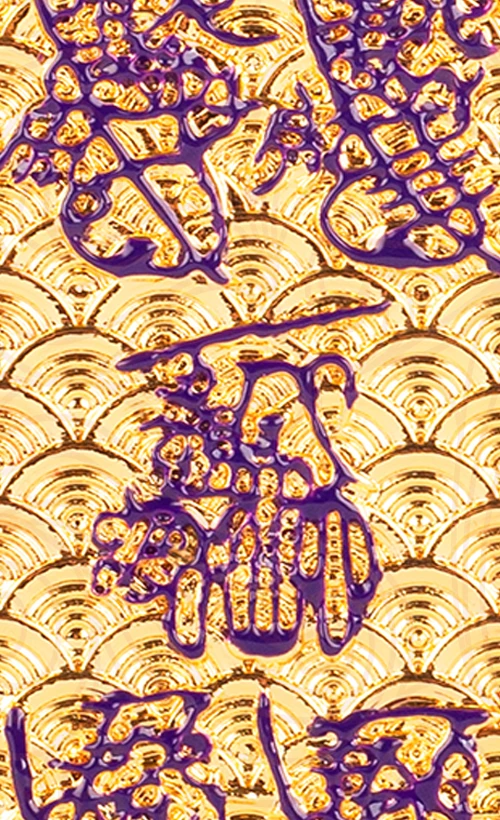
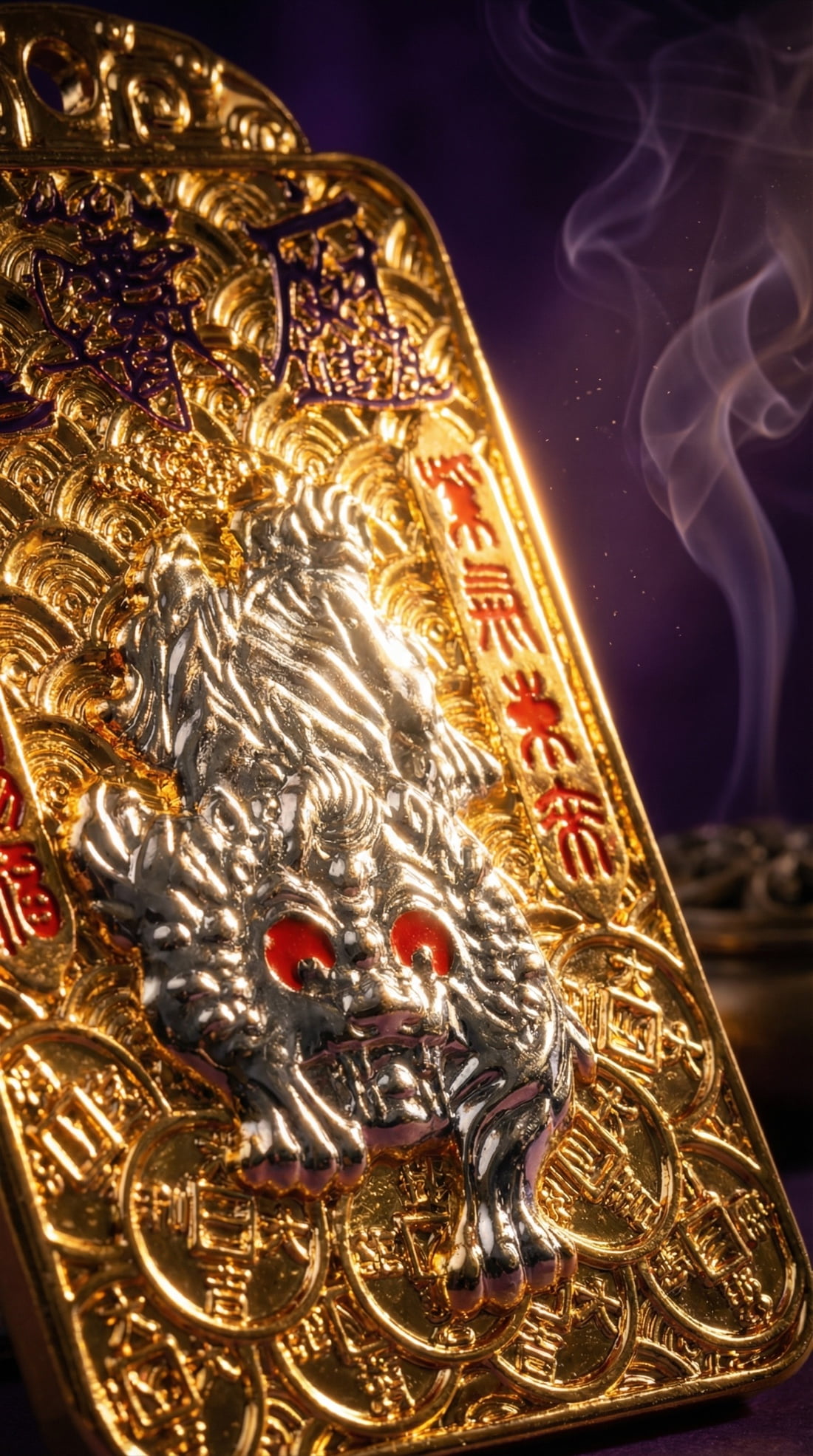
The first impression is a glint. Then a curve, an eye, a line that separates the raised creature from the field behind it. Light makes the depth legible before the eye has named the pattern.
Tianlu Pixiu gives two surface rhythms a place within one outline. The central creature gathers the highlights. Around it, smaller forms repeat more quietly. Let the eye move between these scales: first the creature, then the surrounding marks, then the edge that holds them together.
A close-up is an invitation to attention. The complete front, shown on the object page, restores the silhouette and the relationship of each detail to the whole.
A front can become familiar so quickly that we stop looking. Turning an object over interrupts that familiarity. The outline remains, while the internal order changes.
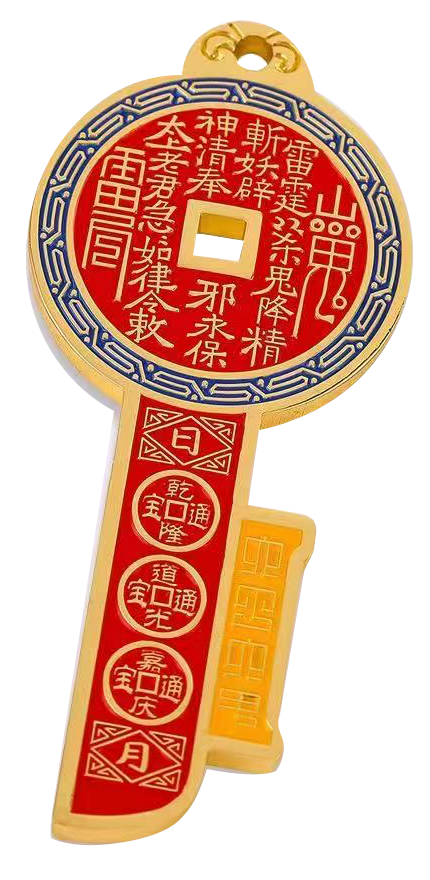
The Wudi Qian Key offers a particularly clear comparison. On one face, line patterns gather around a square opening. On the other, the inscription-led head leads into coin-style roundels along the stem. The same shape contains two different readings.
This is why the collection presents available reverse views beside their corresponding fronts. A complete face and a close detail answer different questions; each has its own place in understanding the piece.
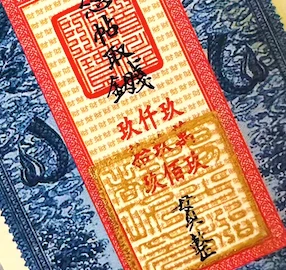
Paper holds colour differently from metal. Its image remains within the printed surface. The red frames, blue field and dark inscriptions of Qianmu create their richness through arrangement.
A New Year keepsake can accompany a few words chosen for one person. The object gives the gesture something to remain with: a surface to look at again, a reminder of the moment in which it was given.
Give the paper the same attention as the sentiment. Handle it with dry hands, keep it flat, and leave room around its corners. A small act of care lets the printed detail remain clear.