A studio for custom devotional objects
May the seven stars
watch over us.
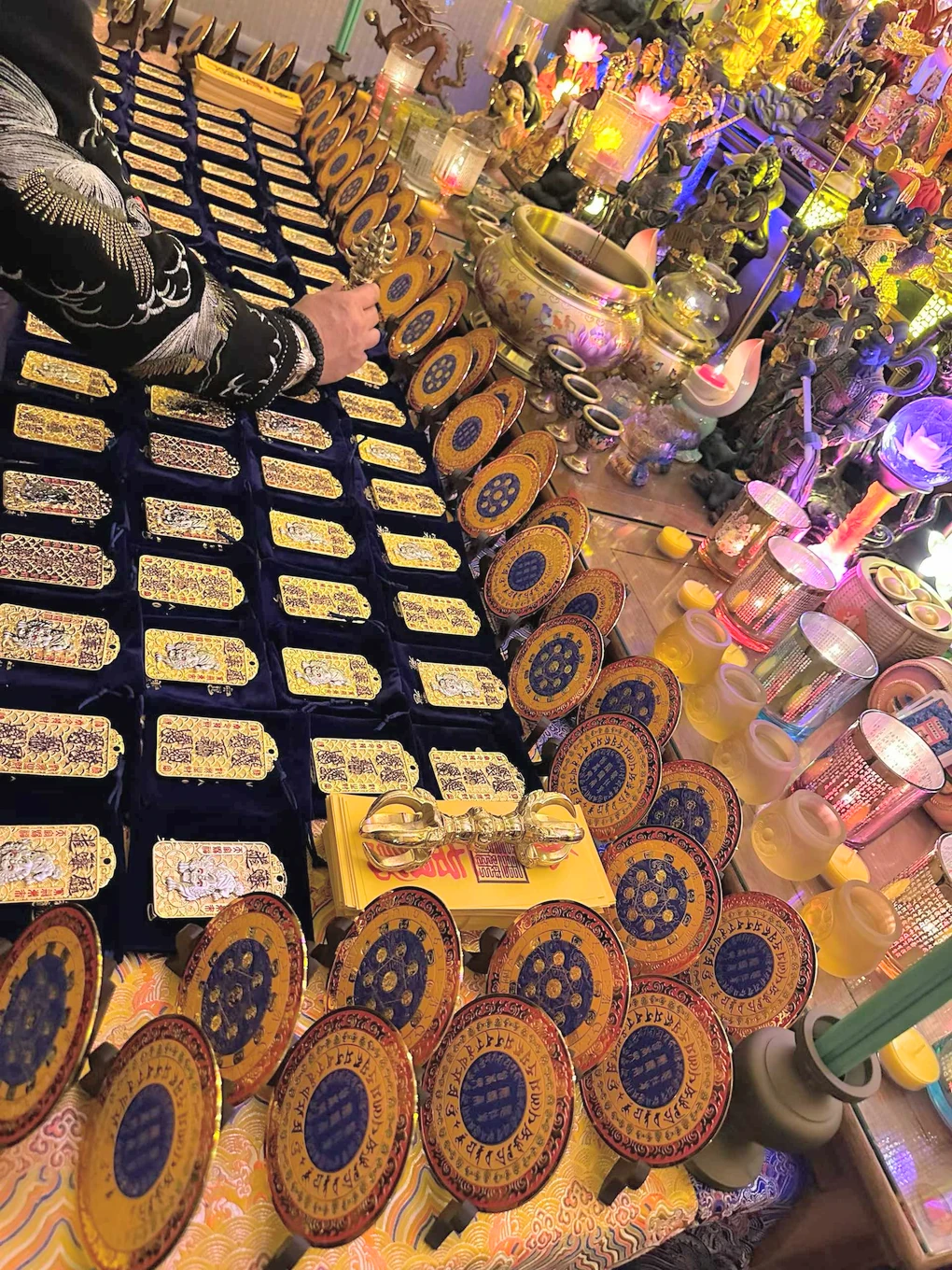
Our work is rooted in Tangmi, the esoteric Buddhist tradition that flourished in Tang China. Eight sacred syllables circle the face of our Doumu Fan. The seven stars on its handle honor Doumu, the Daoist Mother of the Big Dipper.
We bless every piece using only the ancient Sanskrit syllables passed down to us. We believe each carries a spiritual power of its own, and that every object we bless shares in it.
The seven stars of Beidou
Our blessing practice
What does a sacred sound look like?
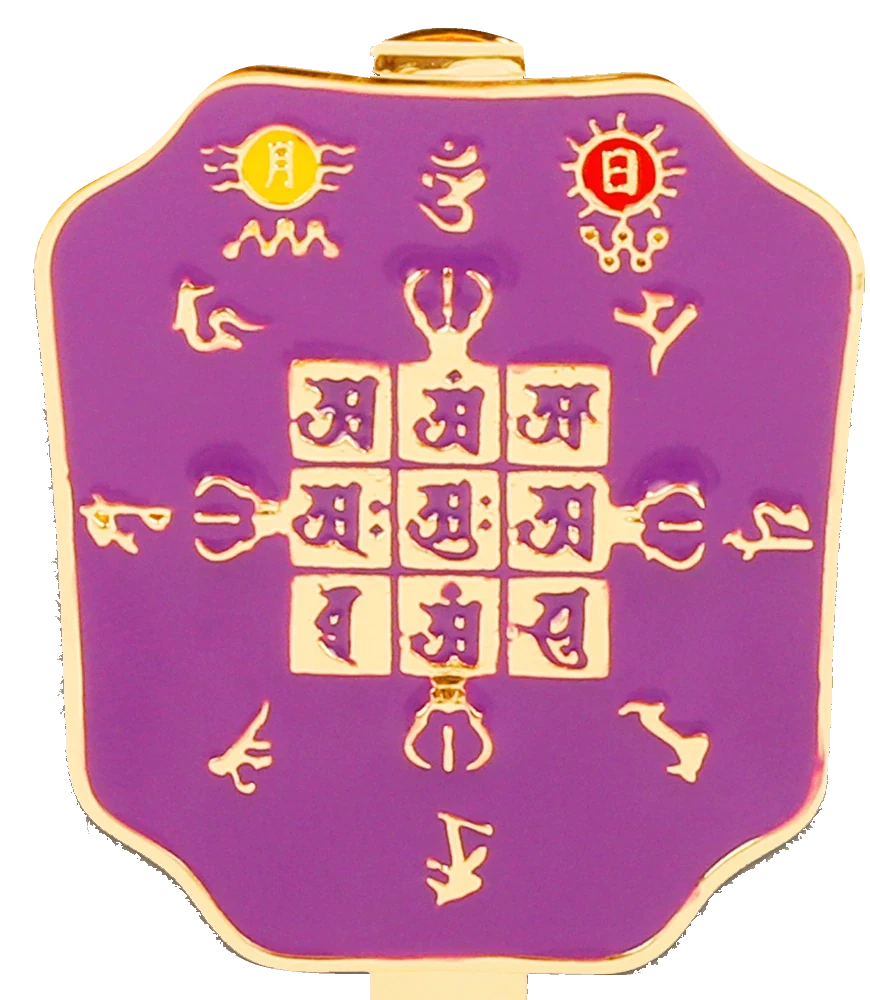
Look at the eight gold signs around the purple face of the fan. Each is a seed syllable, a sacred sound written as a sign. In this design, each stands for a particular Buddhist figure.
Sanskrit is still studied today. When we say ancient Sanskrit, we mean the sacred sounds and letterforms handed down to us for this blessing practice. In our experience, few practitioners today know it.
Top of the fan
Select a mark to find it on the fan.
传承 Our traditions
The traditions
behind our work.
Tangmi is at the heart of our studio. This Buddhist tradition took shape in China under the Tang dynasty, drawing on teachings brought from India. A mantra gives sacred words a voice. A written seed syllable gives the eye a place to rest.
Daoist tradition gives our fan its name. Doumu is the Mother of the Big Dipper. People turn to her in prayers for protection, and we placed her seven stars where the hand holds the fan. In selected works we also draw on Tibetan Buddhist traditions.
Our teacher on the studio’s practice
Our teacher describes our practice as roughly half Tangmi, two-fifths Daoist and one-tenth Tibetan Buddhist. Different works bring different parts of that inheritance to the foreground.
Tangmi in Chang’an
In the early ninth century, the Japanese monk Kūkai studied with the Chinese master Huiguo at Qinglong Monastery in Chang’an. He brought those teachings home to Japan. In this tradition, hand gestures, spoken mantras and visualization bring body, speech and mind into practice together.
Read the Tokyo National Museum’s account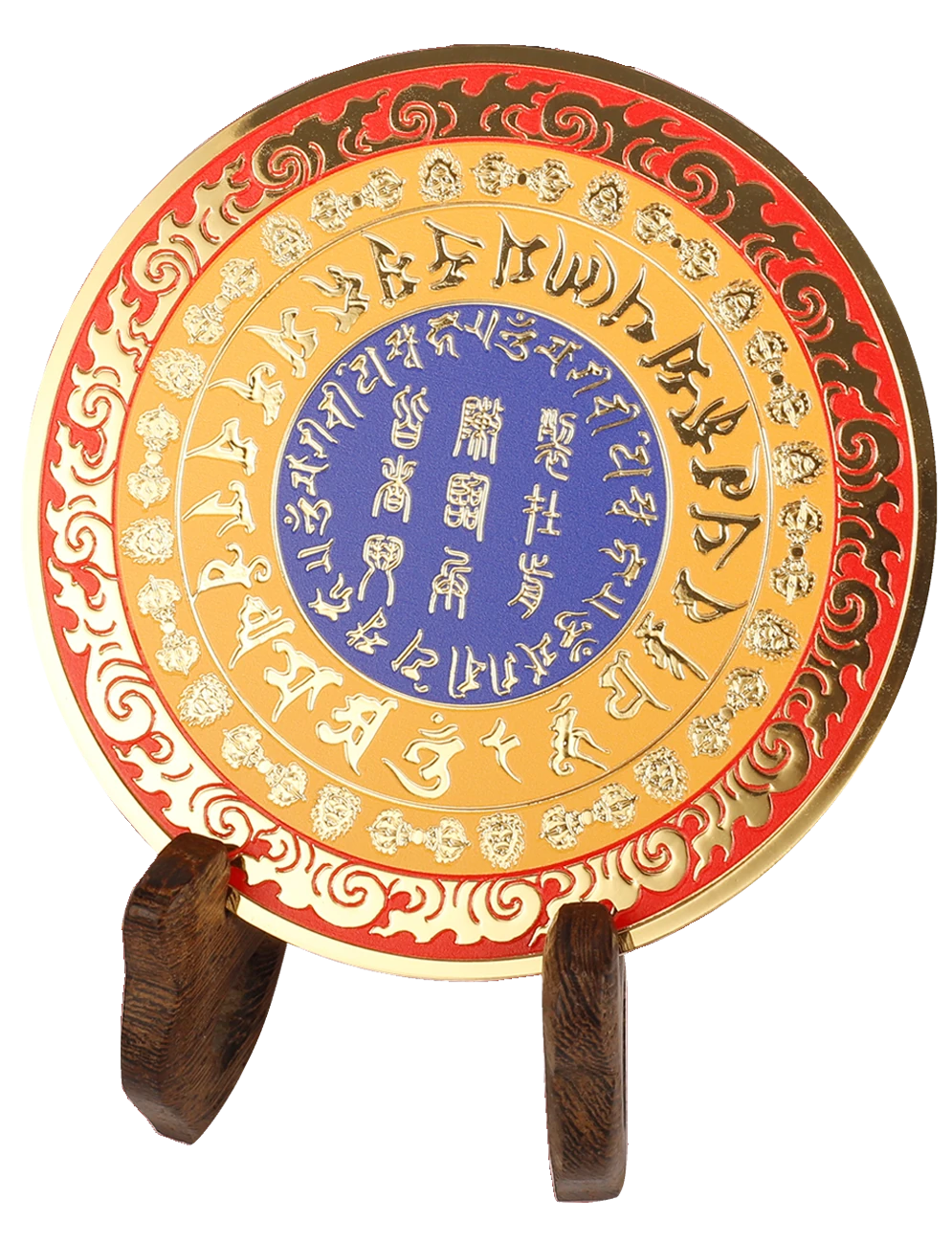
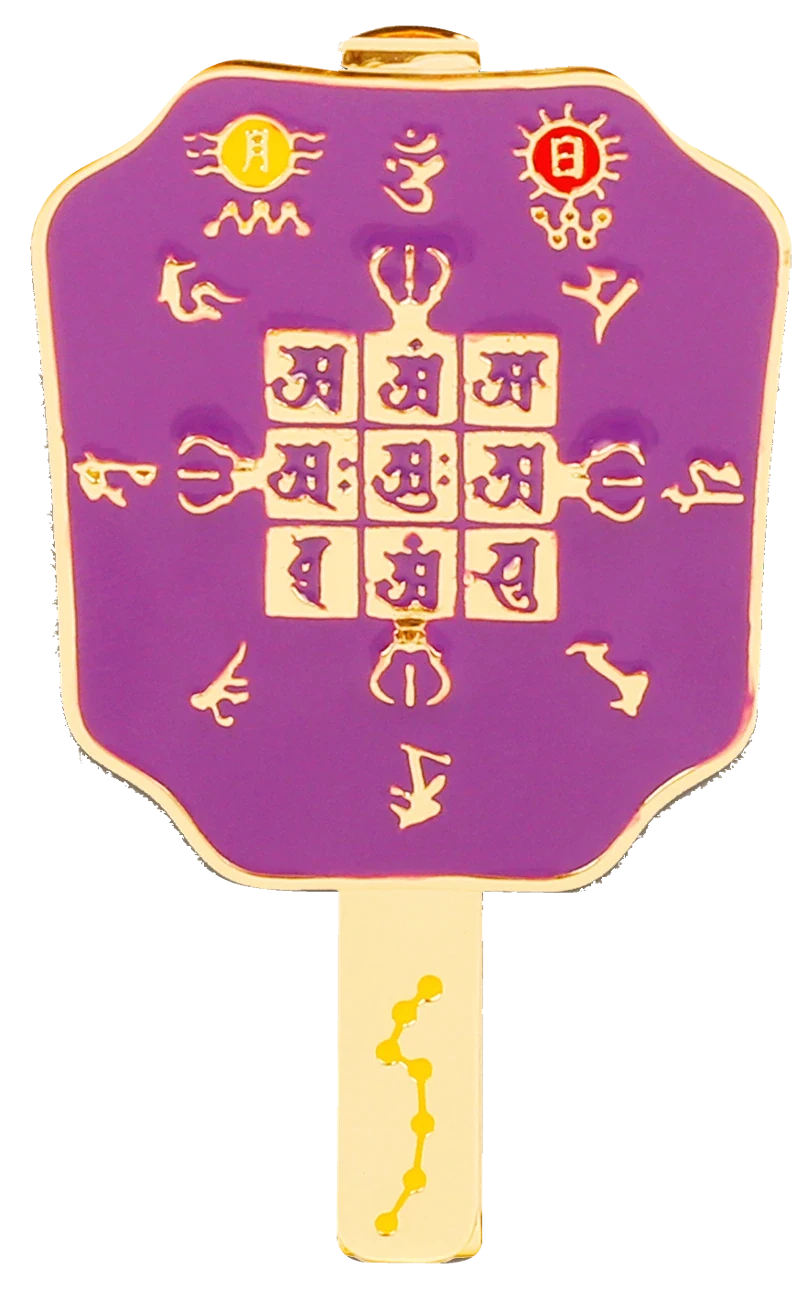
The fan turns from its purple face to the gold-colored back. A side view shows the hinged clip opening and closing, modeled from the studio film.
The film could not be played here. Open the video file
Gold-plated copper
Doumu Fan
Seven stars run along the handle of the fan. They trace the Big Dipper, whose mother, Doumu, gives this piece its name. To hold the handle is to hold a prayer for protection.
On the purple face, the sun and moon sit above eight sacred syllables. Each gold sign has its own place around the nine-square center.
Study the four details of the fan
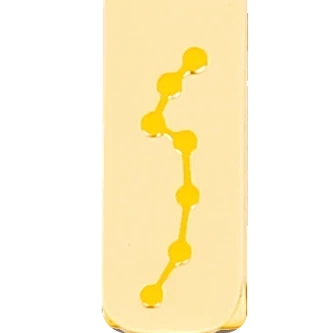
Follow the gold line along the handle. Its seven dots trace the Big Dipper.
The thin gold edge comes into view between the inscribed face and the seven stars on the reverse.
The film could not be played here. Open the video file
Gold & hand-applied color
Guangming Mirror
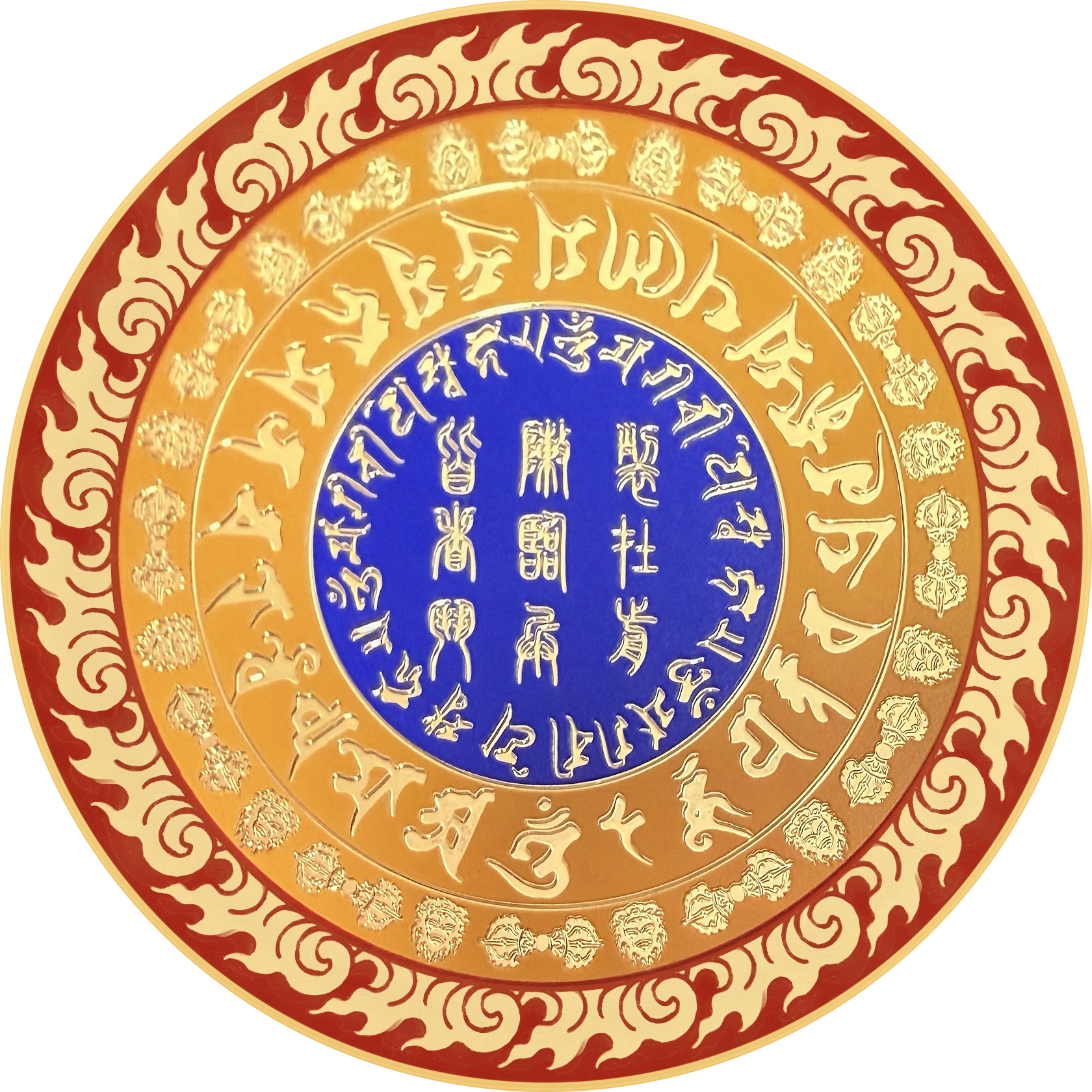
Follow the writing around the outer gold ring. A second row of letters circles the blue field, enclosing a square of Chinese seal script. The Big Dipper appears on the reverse.
Hand-applied red and blue color sets off the 24K gold plating. In the studio’s tradition, the mirror carries a prayer for protection and a quiet mind.
Read the rings and the reverse
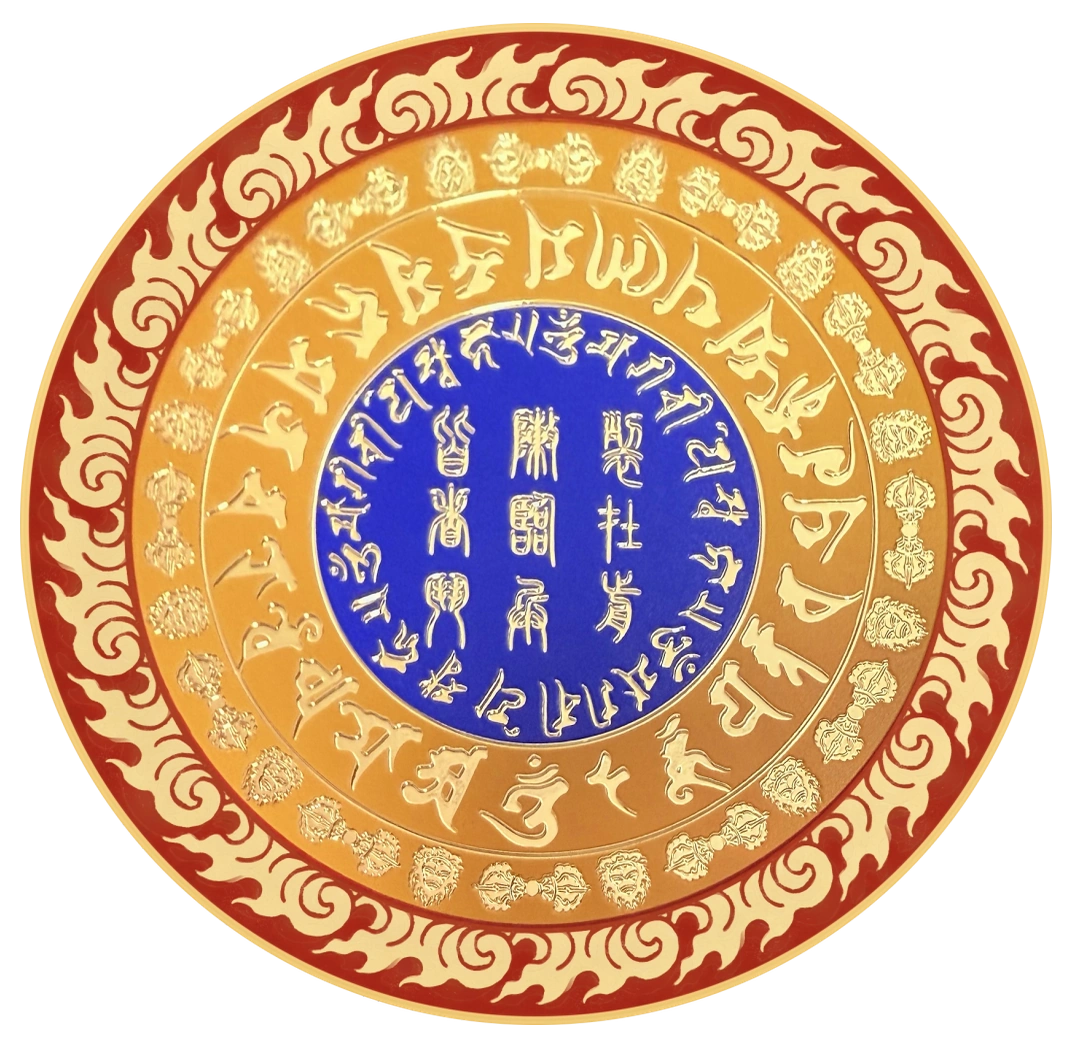
The gold ring
Broad dark strokes follow the curve of the gold band. Choose a sample to find the same strokes on the mirror.
Relief & inscription
Tianlu Pixiu
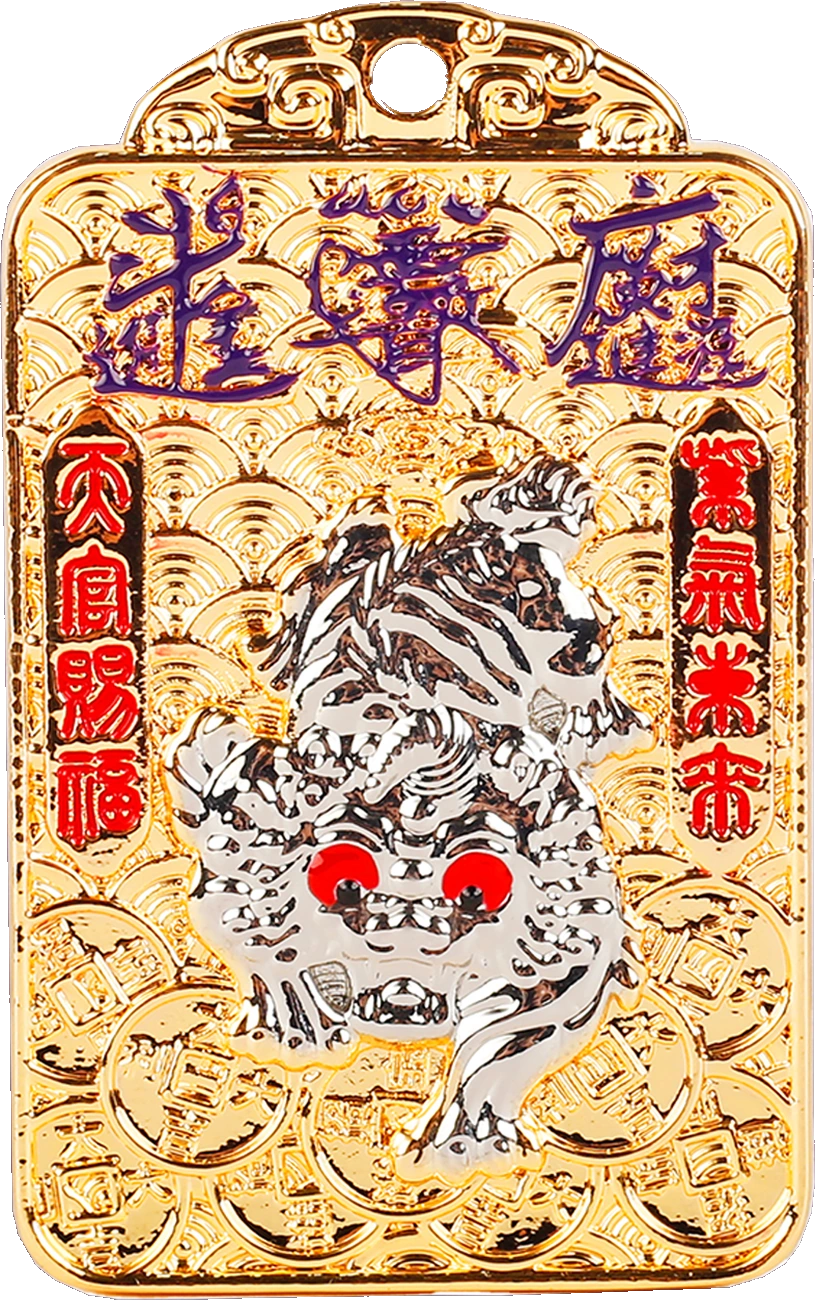
A silver-colored Pixiu lies in shallow relief on a gold-plated copper plaque. A touch of red outlines each eye. Above the animal, purple lettering follows the raised strokes.
Beneath the front paws lie coins with square holes. In Chinese tradition the Pixiu is associated with prosperity. Here it carries a wish for a secure livelihood.
A limited-angle study modeled from the photographed front of the piece.
The film could not be played here. Open the video file
A Lunar New Year gift
Qianmu Paper Keepsake
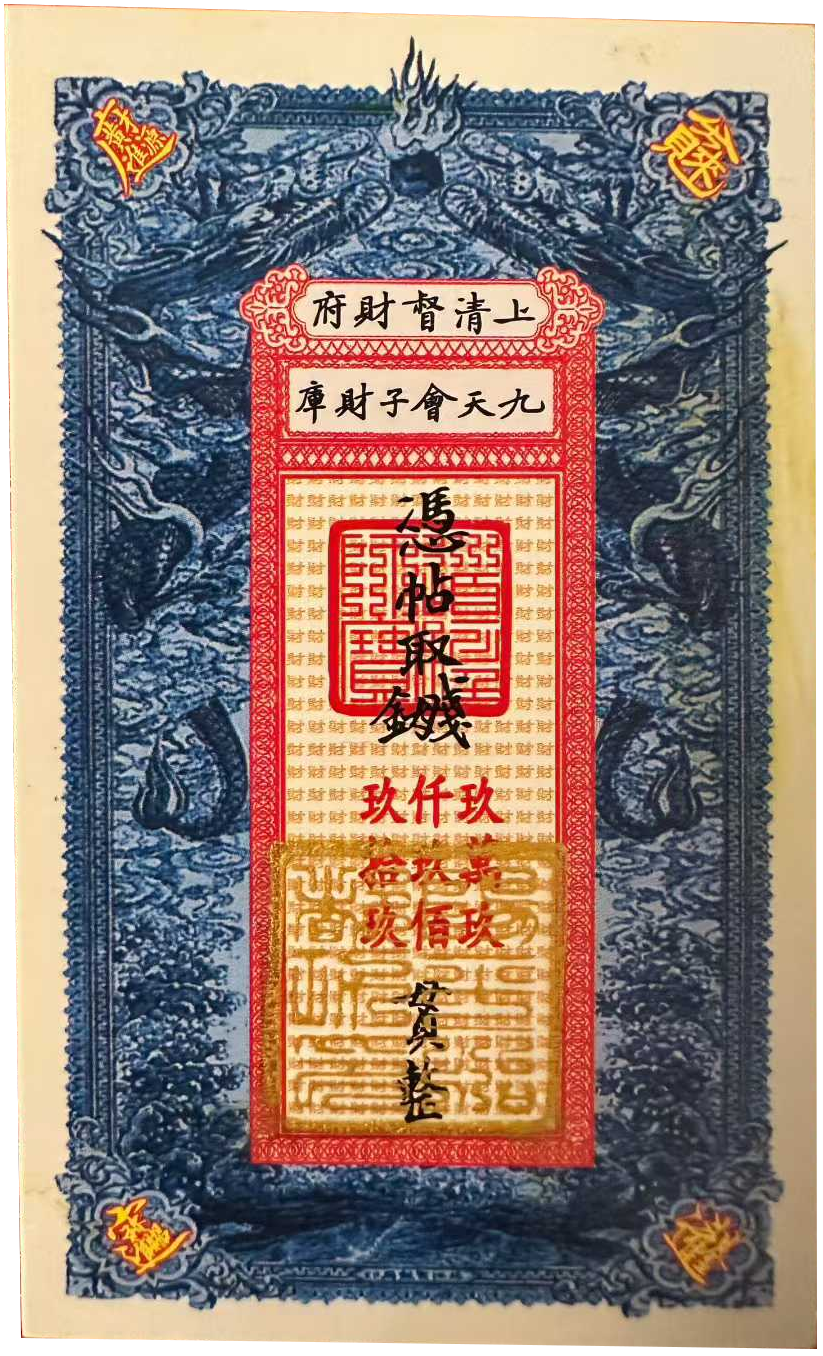
Two blue dragons frame the seals and lettering on this paper note. Qianmu means “mother of money.” The wish written into the design is for prosperity in the year ahead.
At Lunar New Year, a parent can give the note to a child, or a grown child can carry one home to their parents.
A full turn, modeled from both faces on the studio poster.
The film could not be played here. Open the video file
Coins & trigrams
Five Emperors Coin Key
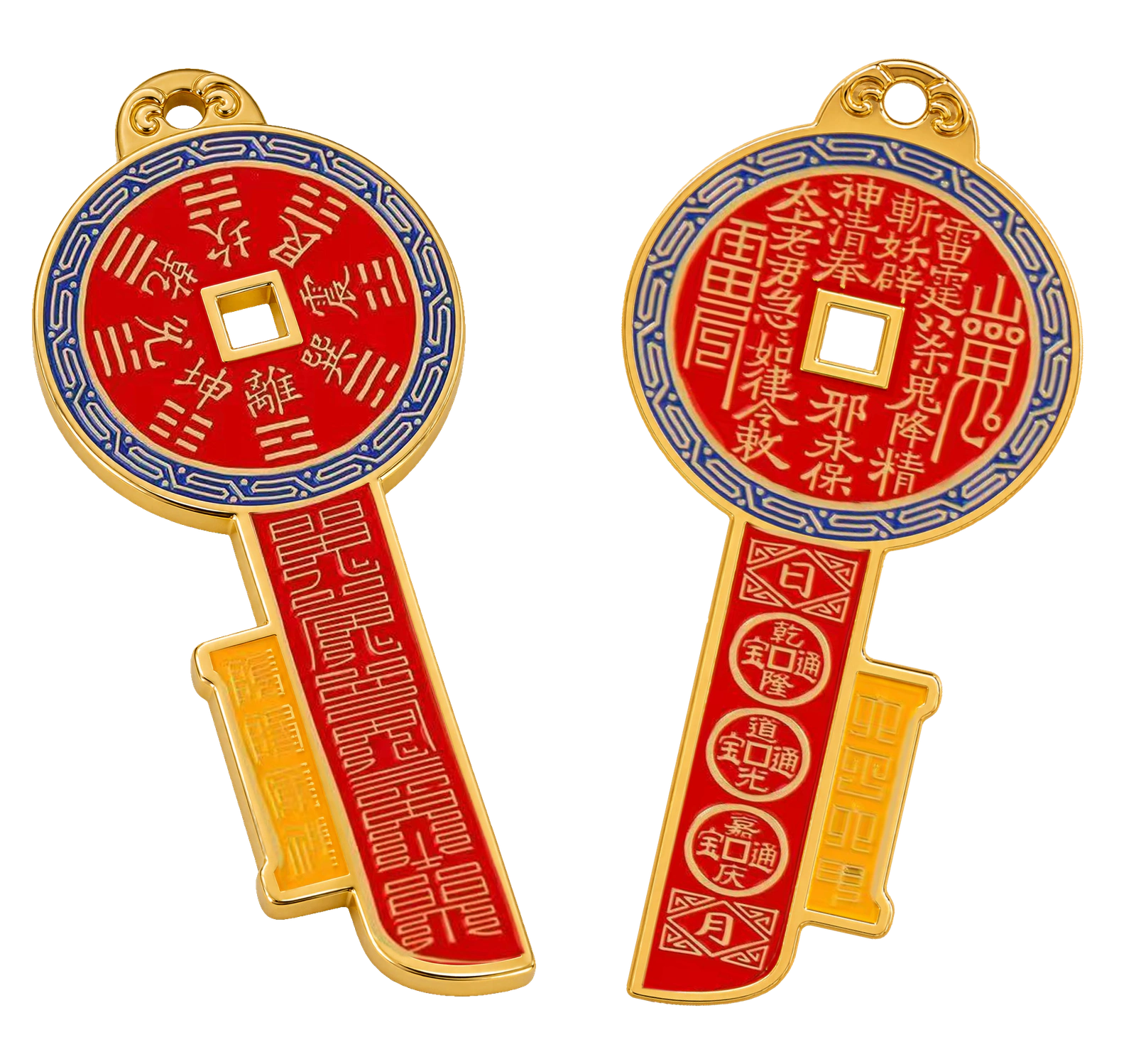
Look through the square opening. On one face, gold talismanic lettering stands out against a deep red ground. Turn the key over and eight trigrams circle the same opening, each made of three broken or unbroken lines.
The sun and moon characters frame three coins along the shaft. The shape of a key gives these signs a purpose in daily life, carrying a wish to find a way through difficulty.
Look closer at the key
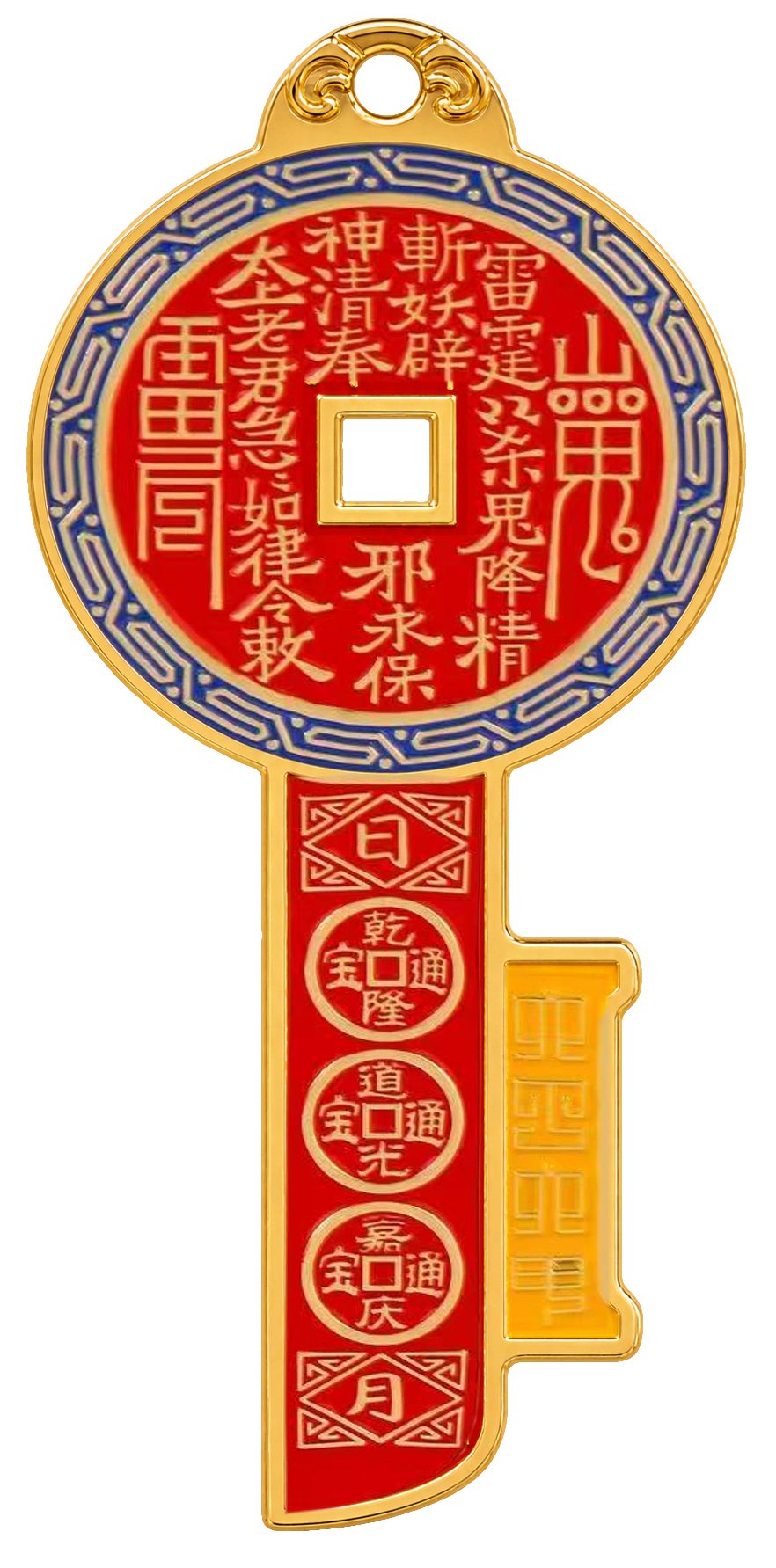
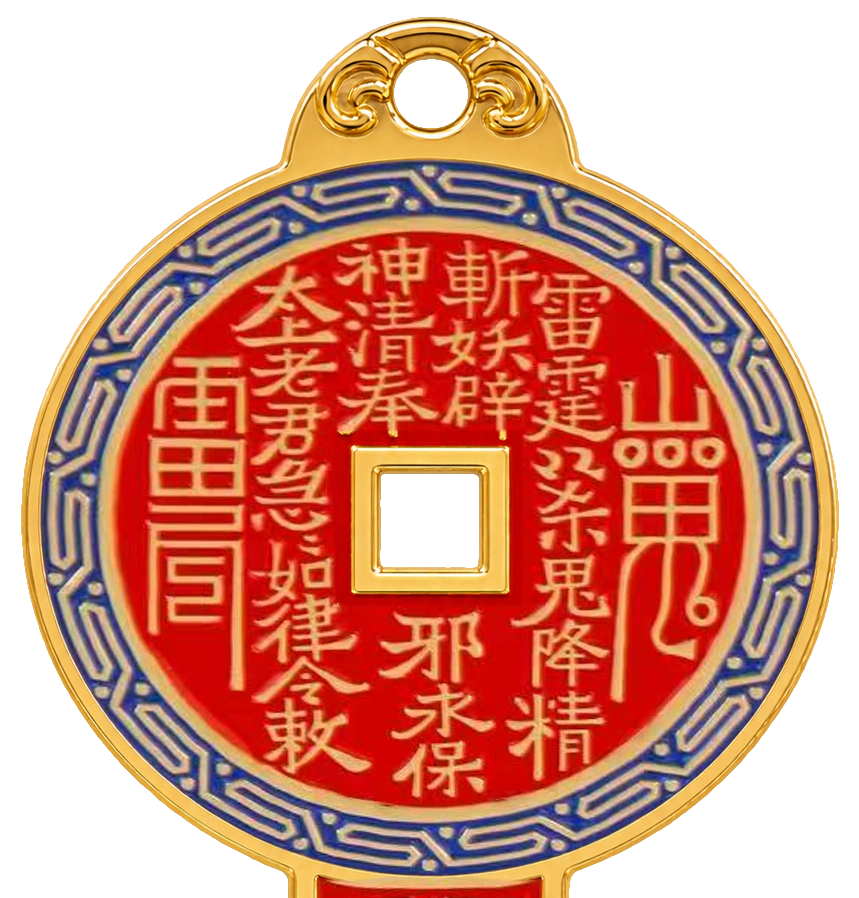
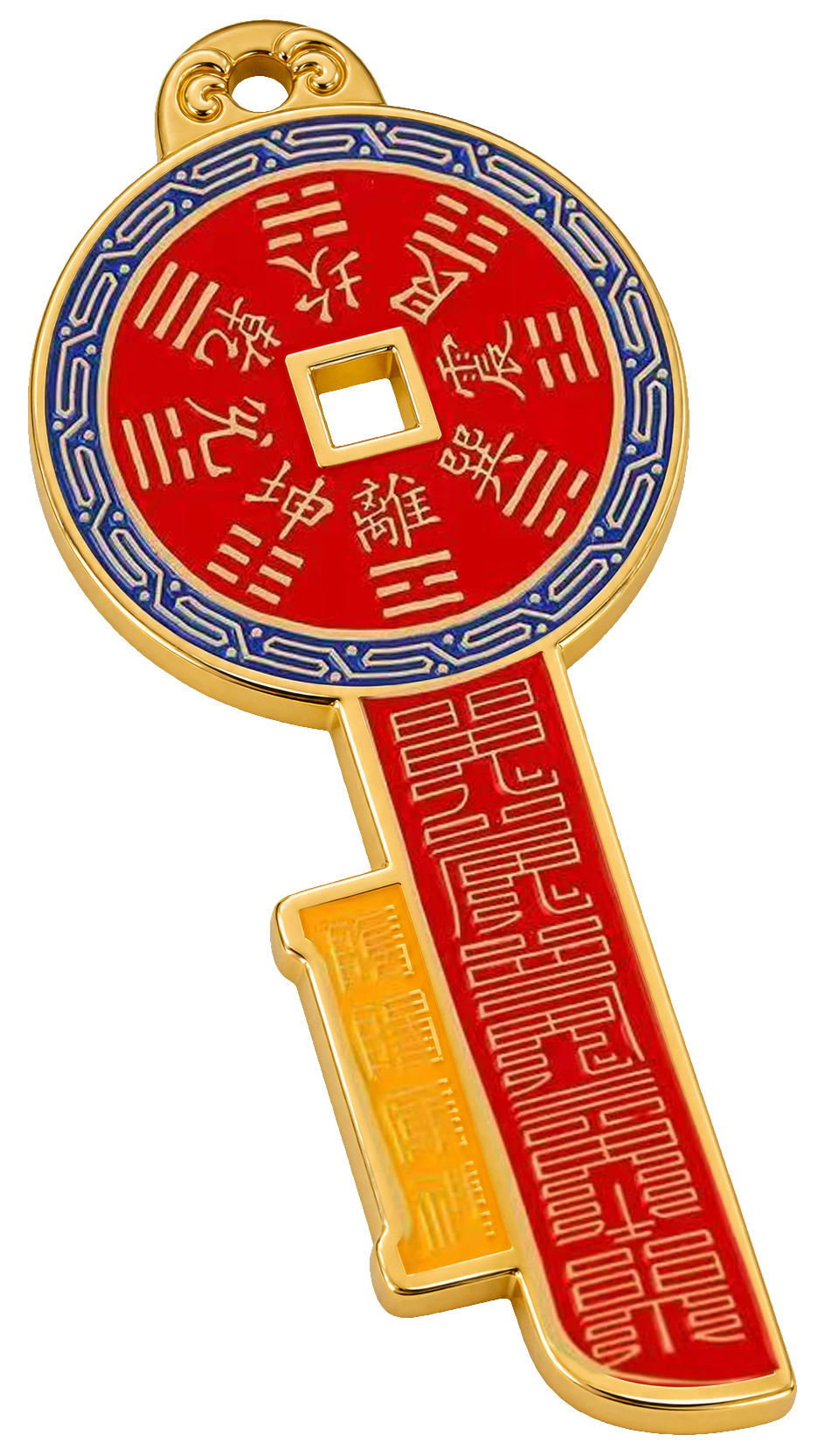
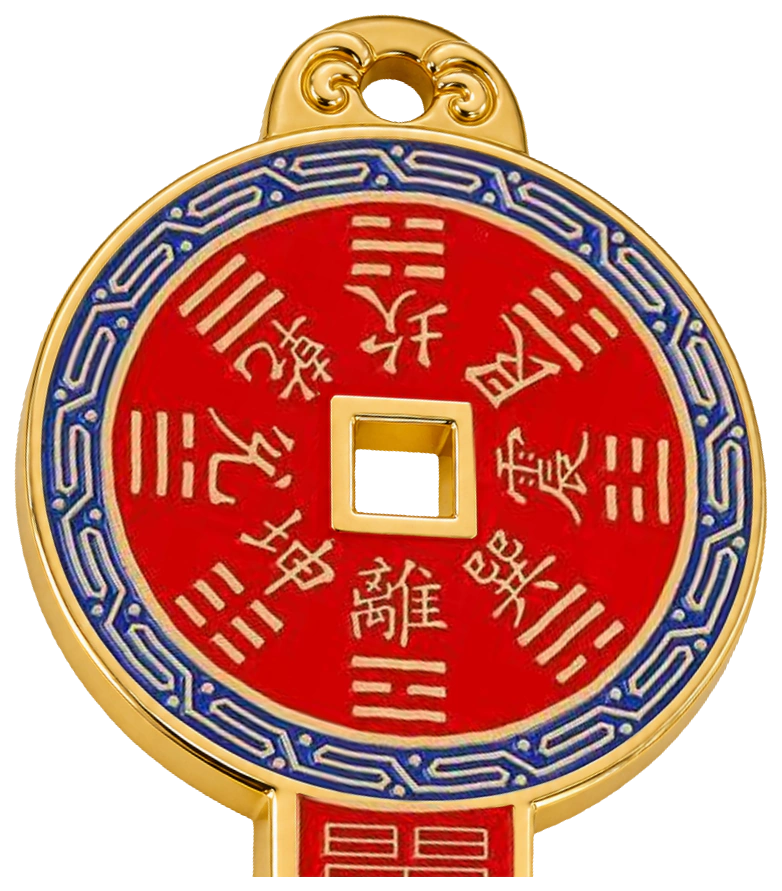
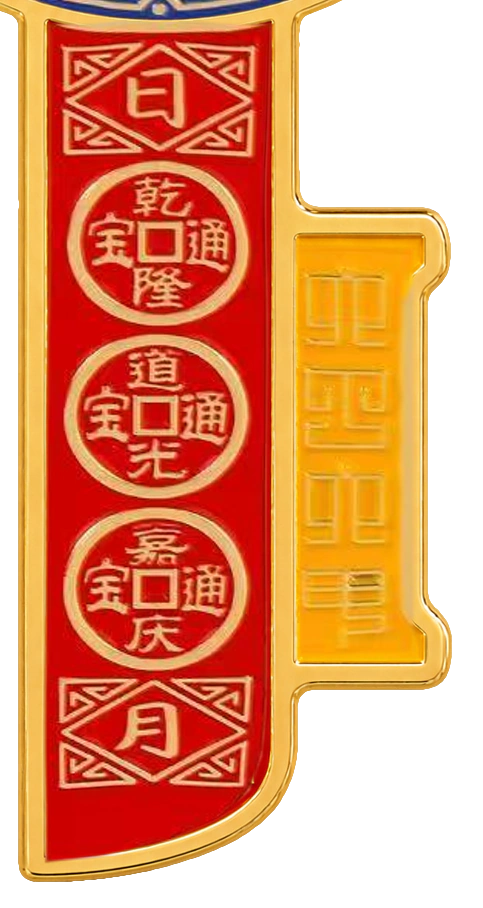
Start at the square opening. Talismanic characters fill the red field around it.
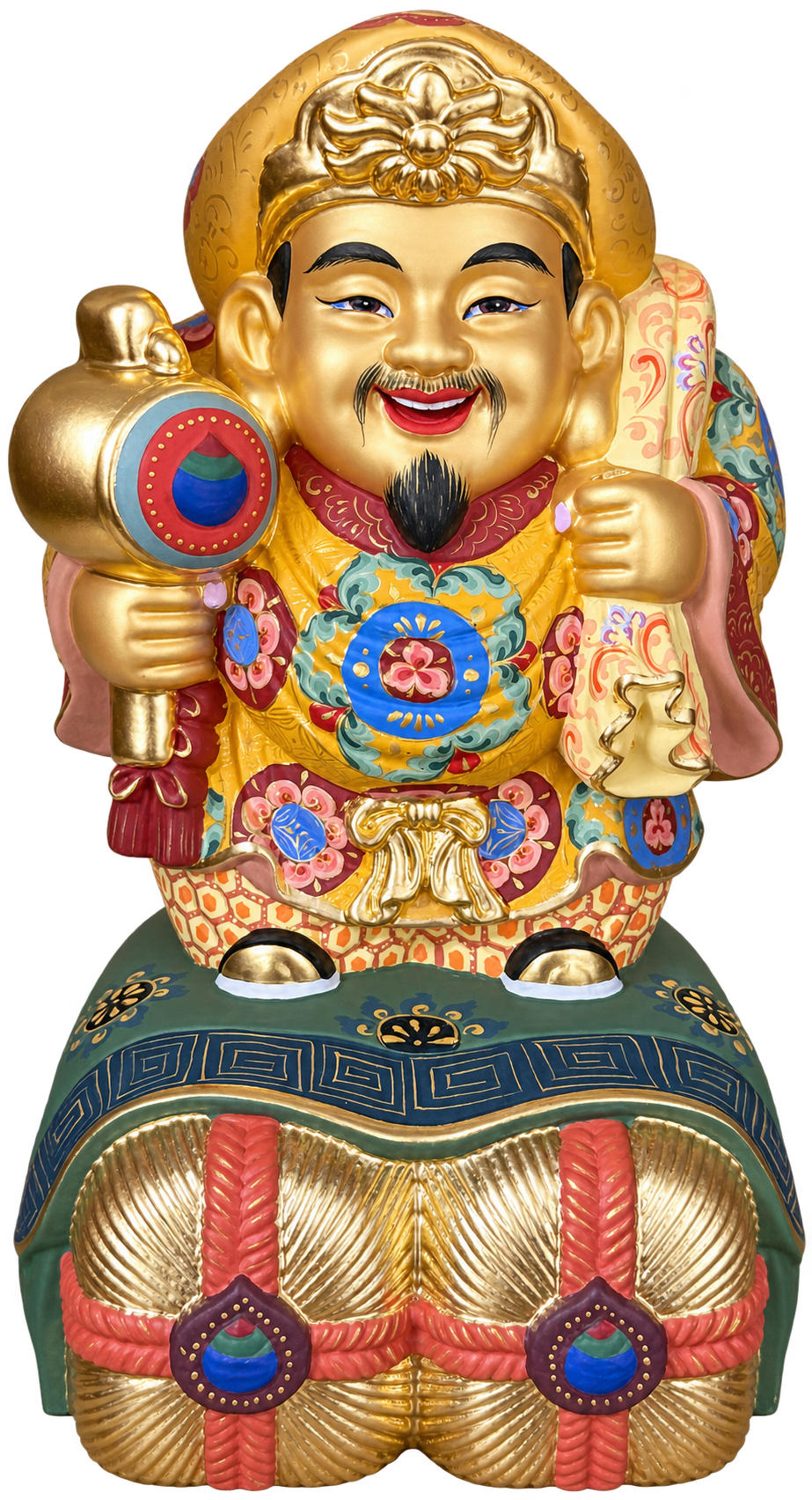
The pale sack curves over the shoulder. Its painted scrolls come into view as the figure turns.
The film could not be played here. Open the video file
Painted sculpture
Mahākāla
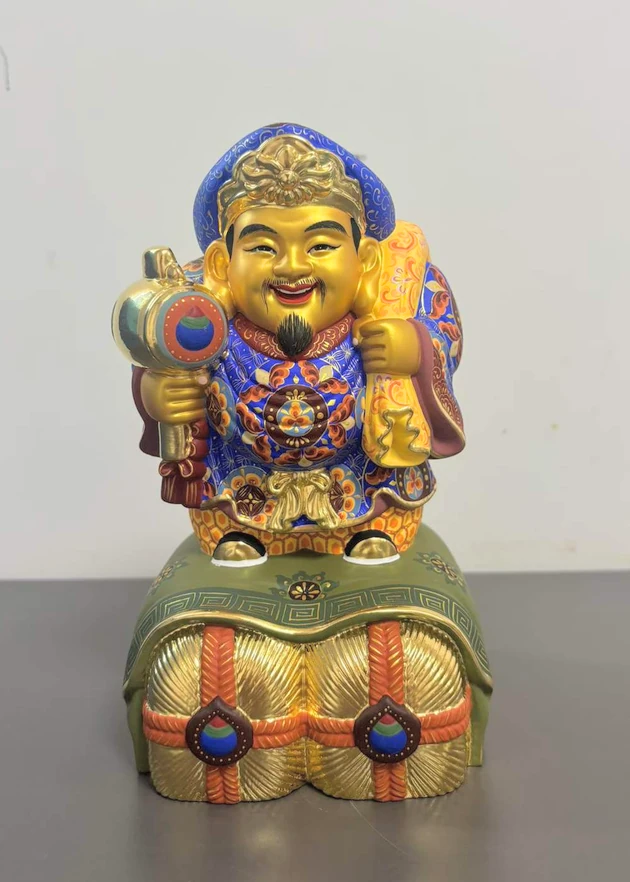
Mahākāla holds a round-headed mallet in one hand and gathers the neck of a sack in the other. Its pale, scroll-painted body rests against his back.
Our studio depicts Mahākāla as a deity of prosperity. Red bands cross two gold-colored bundles at the front of the pedestal. Around the sides, small painted flowers stand out against the green.
See the carving and painted robes
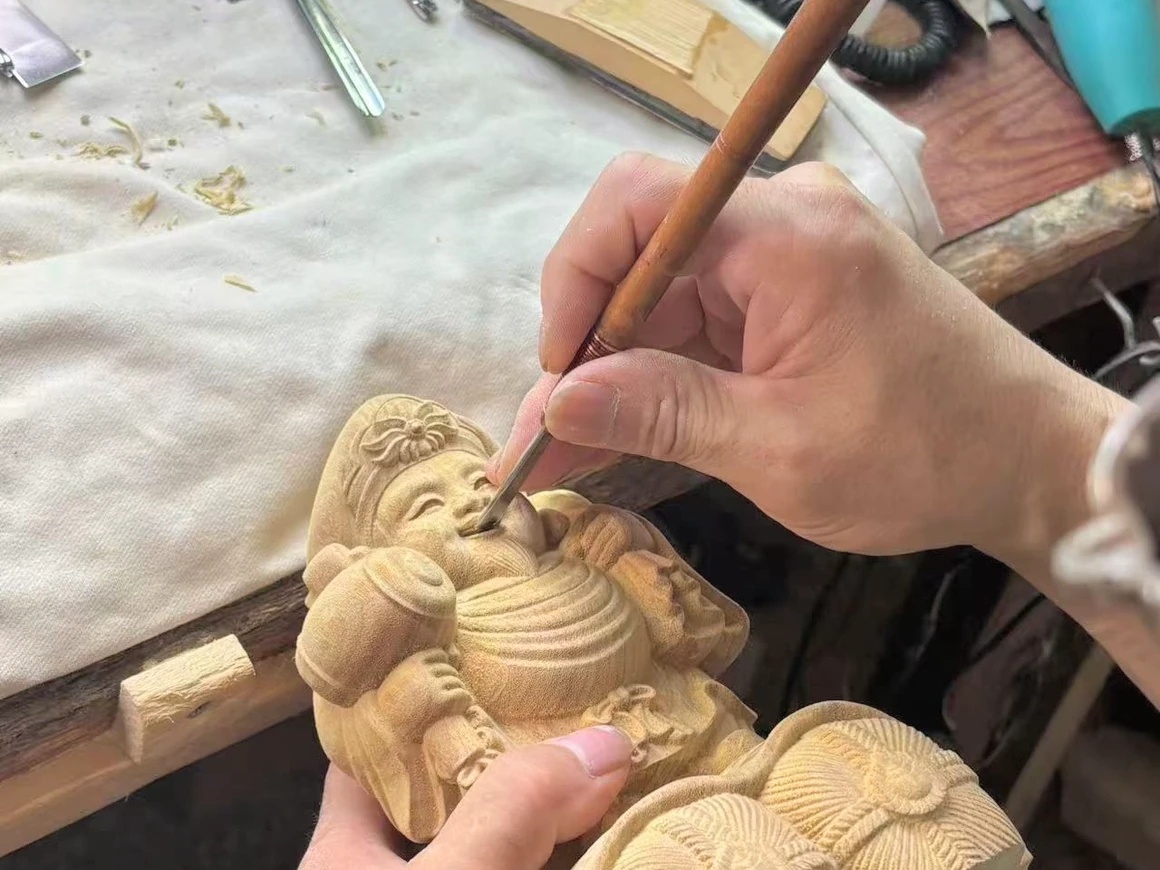
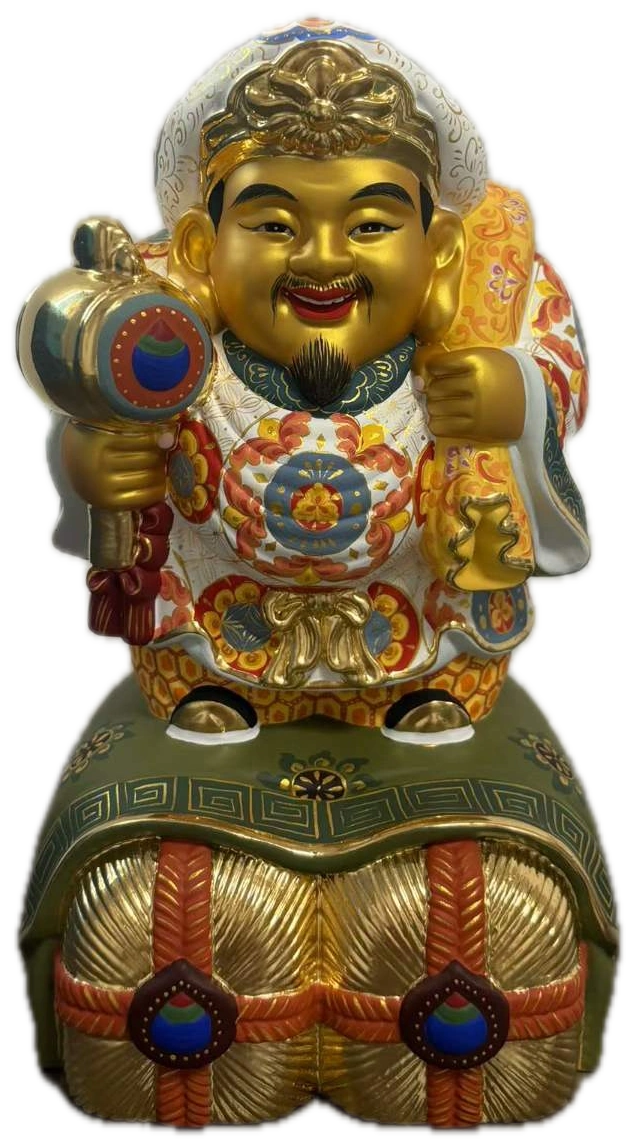
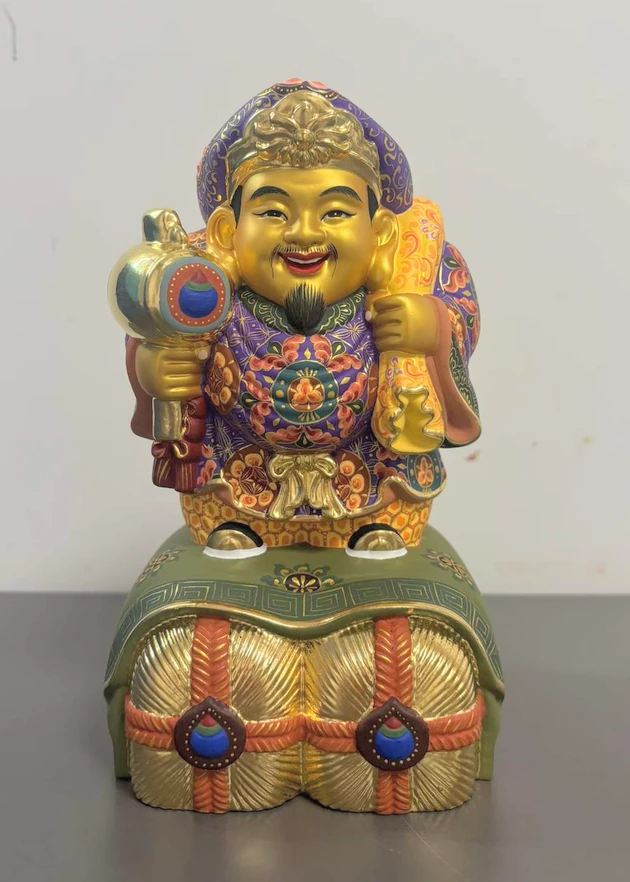
The smile is already visible in the unpainted face. Look just below the tip of the carver’s tool.
Inside the studio
A carver steadies Mahākāla in one hand and takes a fine tool to his cheek. Look closely and you can see the smile before the figure receives its first color.
Explore Works & Workshop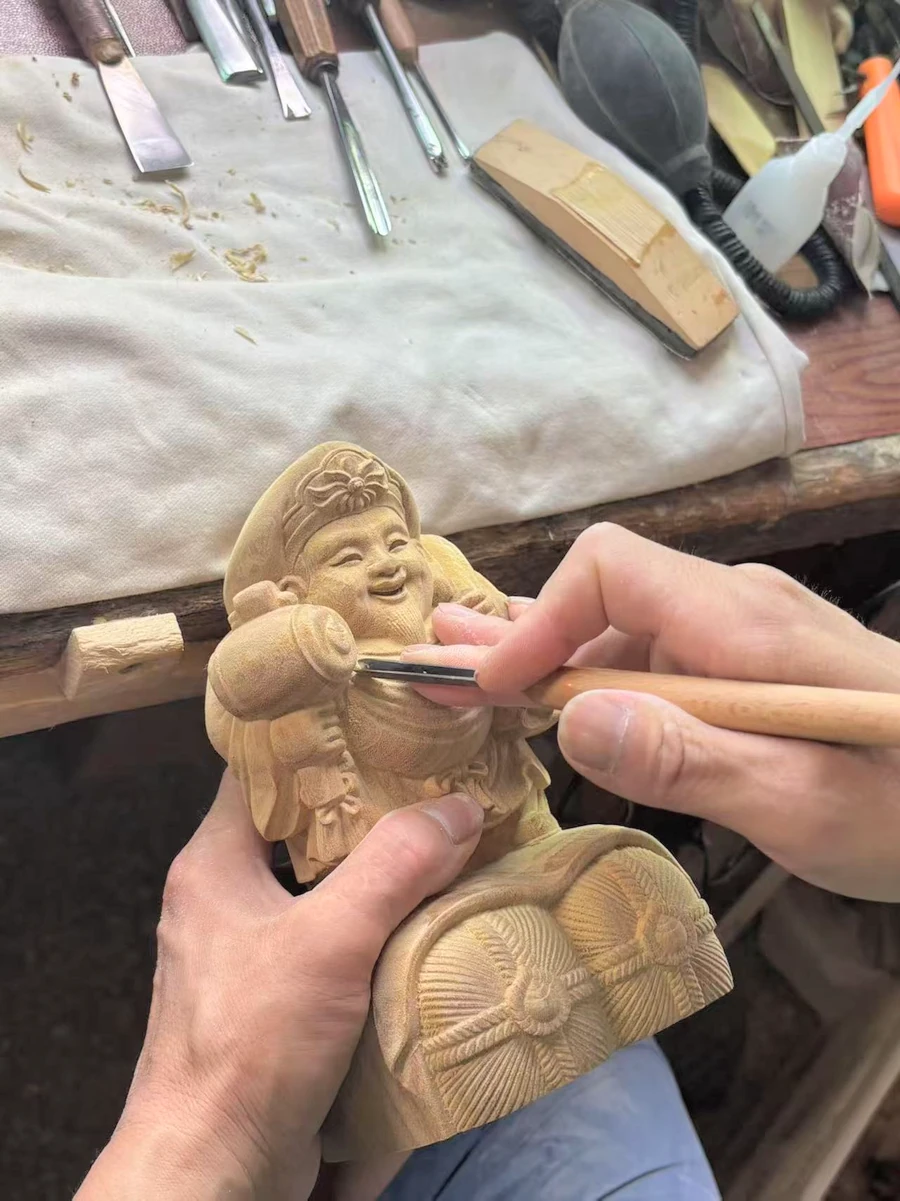
Reading the symbols
Follow a star, read a trigram, or look closely at a letter.
A blessing from our studio
May good fortune find you.
May harm pass you by.
May you be well in body and at peace in mind.